
Space Tech
-

Blue Origin’s New Glenn and the Rise of Reusable Rockets
Blue Origin’s New Glenn marks a breakthrough in reusable rockets, boosting commercial spaceflight, supporting NASA missions, and advancing capabilities.
-

A New Look at the Cosmic Web Reshaping Cosmology
New research uses fast radio bursts to reveal how the universe’s missing matter hides in the cosmic web, offering a major confirmation of the Big Bang theory.
-

The ESCAPADE Mission: New Spacecraft Revolution Headed for Mars
NASA’s ESCAPADE mission, launching two small spacecraft to study Mars, symbolizes a shift towards affordable, collaborative deep space exploration technology.
-

Moon Space Traffic Surge and New Safety Systems Emerge
Recent lunar missions are rising, emphasizing the need for space traffic coordination. Improved monitoring could enhance safety and support efforts.
-
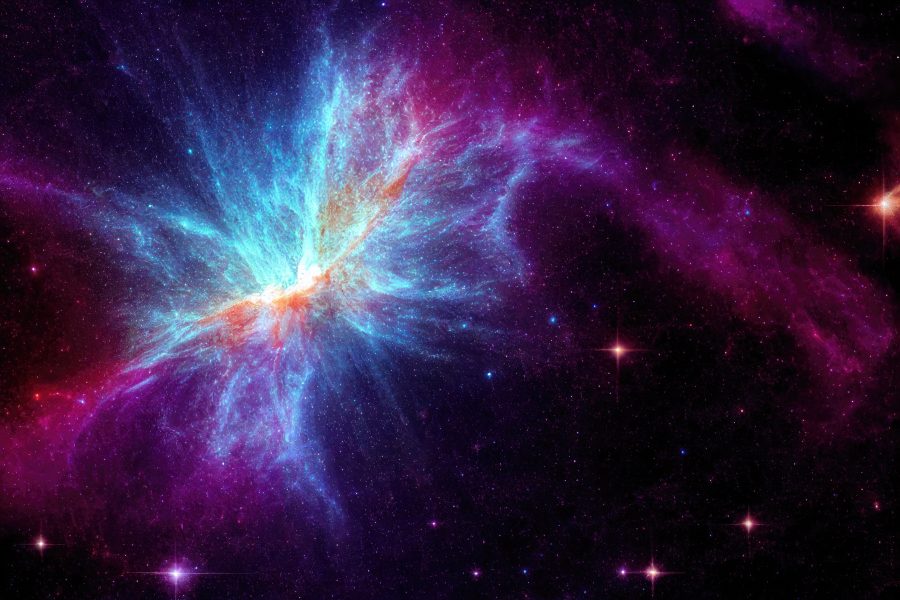
ASKAP Telescope Discovers New Massive Bridge Linking Galaxies
Astronomers using the ASKAP Telescope discovered a vast galactic bridge linking two distant galaxies, shedding light on the universe’s hidden hydrogen.
-

New NASA Mission 2025— Studying the Sun to Protect Earth
The newest NASA mission: Launching two heliophysics missions to study the Sun’s impact on tech and space weather to improve understanding and forecasting.
-

1976 NASA Viking — The First and Only Direct Search for Life
The 1976 NASA Viking missions conducted were pivotal in exploring Mars, seeking signs of life through innovative experiments and atmospheric analysis.
-

Light Pollution Threatens Our View of the Milky Way
Increased light pollution is diminishing natural darkness, obstructing astronomical observations, and impacting our ability to see the night sky’s wonders.
-

New Artificial Solar Eclipse Tech to Study the Sun Released
The Proba-3 probe simulates an artificial solar eclipse to enhance understanding of solar activity and improve space weather predictions.
-

Nuclear Energy on the Moon and the World Influence
The emerging space race focuses on building infrastructure, particularly nuclear energy reactors, to support exploration and economic growth.